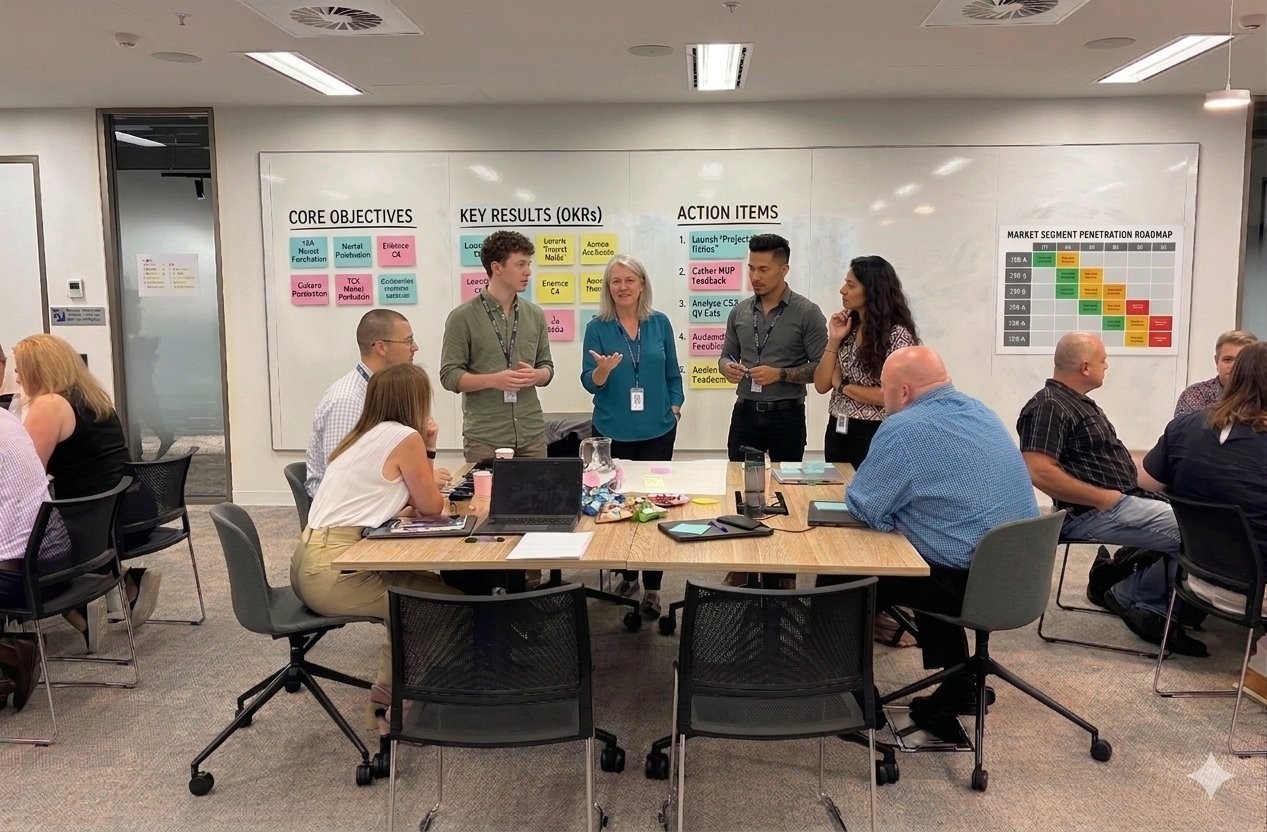








DAFF workshop

Designed for people.
Built on trusted systems.

Health & Essential Services Design Studio. Designing better digital and in-person experiences, and the organisations built to deliver them.

Studio
Health & Essential Services
Approach
Human-centred, evidence-led, business enabled
Based
Canberra · Sydney · Melbourne
We work with
Dept of Agriculture, Fisheries & Forestry Togetha University of Canberra Dept of Education, Skills & Employment Dept of Health, Disability & Aging AGL Australia AvePoint Rivergum Communications Services Australia Avec Australian Centre for Disease Control Zenith Dept of Agriculture, Fisheries & Forestry Togetha University of Canberra Dept of Education, Skills & Employment Dept of Health, Disability & Aging AGL Australia AvePoint Rivergum Communications Services Australia Avec Australian Centre for Disease Control Zenith
Who we are

The organisations and systems behind the care.

The design of a service matters as much as the policy or funding behind it. Whether people interact in person, online, or both, the experience shapes whether they trust the system and get the support they need. Arteri brings together business design, governance, and human-centred practice to design services that work across every channel.

A small, senior studio. Deep expertise. A trusted network. We speak plainly and stay close to delivery.

"We work with leaders to design how organisations operate, so their services and decisions better support people when it matters most."
Fran Mether, Founder
What we do

Where we focus.
How we help.

Four areas of work. each can stand alone, most powerful when used together.

01
Business & Service Design
Designing models of care, service systems, and operating structures that are clinically sound, financially sustainable, and grounded in how people actually experience services. Co-design is our primary method. We work with you, not for you.
02
Policy, Governance & Investment
Navigating policy complexity, strengthening governance frameworks, and building investment cases that stand up to Treasury, board, and ministerial scrutiny. Strategy without governance is just aspiration.
03
Technology & AI by Design
Technology and AI are reshaping what health and essential services can do. The risk is not moving too slowly. The risk is moving without sound design, clear governance, and a human-centred purpose. We help organisations decide what to invest in, design better digital and in-person experiences, use data well, and adopt AI responsibly.
04
Delivery & Implementation
We stay in the room. Working alongside your team through the hard work of change. We translate design into delivery, accountable to outcomes not just deliverables. For longer-term projects, we embed experienced practitioners across business analysis, research, UX, UI, solution architecture, project management, change management, and service design.
How we work

Your people.
Complex systems.
Clearer outcomes.

Your organisation does not exist in isolation. It sits inside policy environments, funding structures, technology changes, and the lived experience of the people you serve. We help you understand that whole picture — then design services and structures that genuinely work within it.

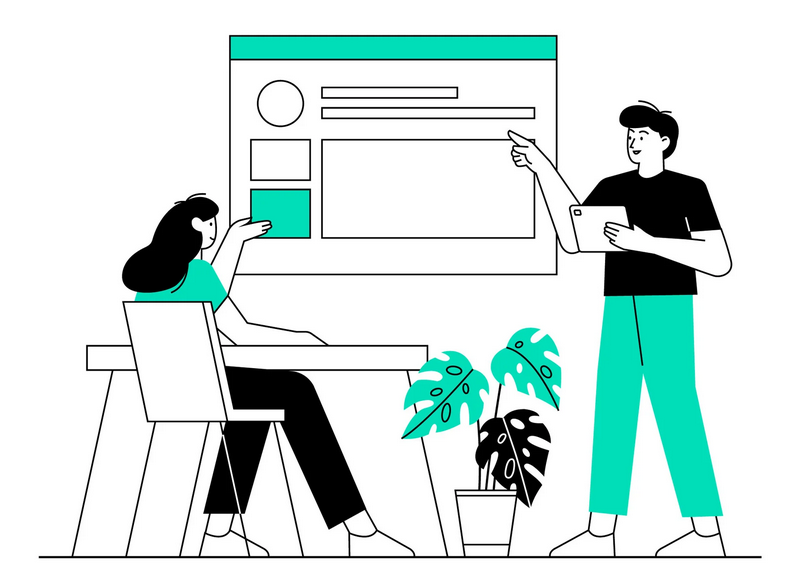
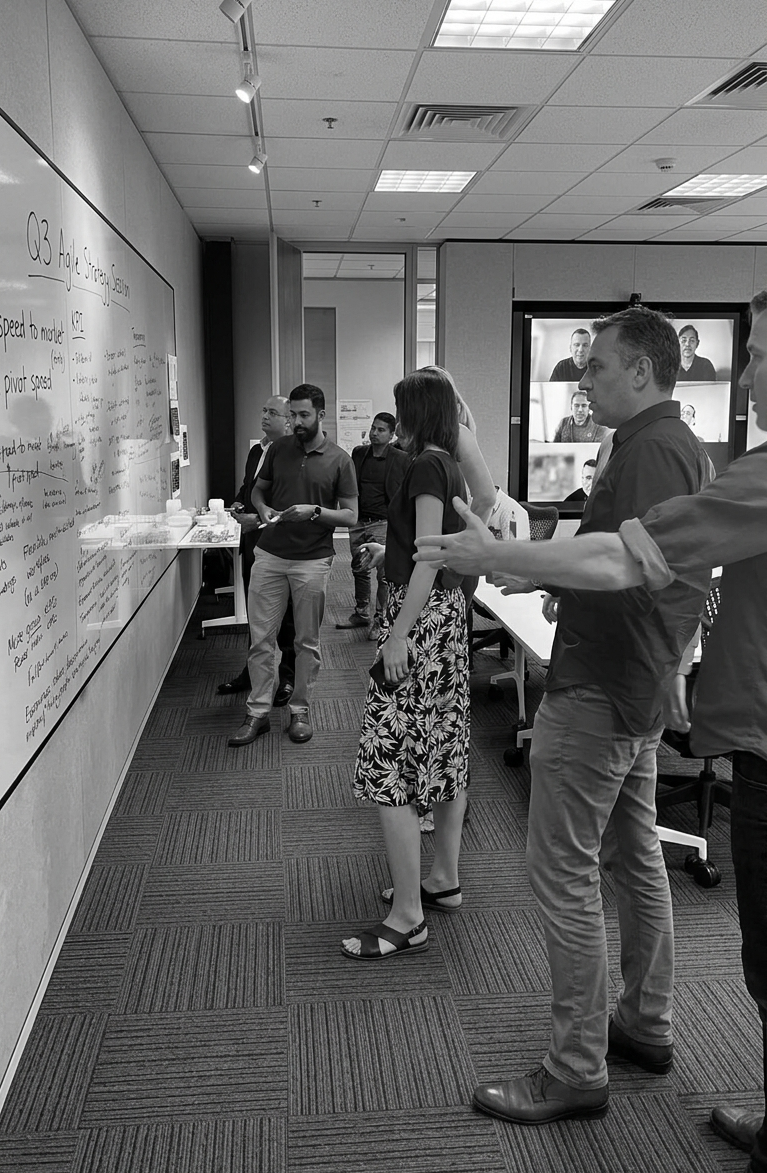
Strategy workshop at whiteboard
01
Understand the ecosystem
Services don't operate in isolation. Policy environments, funding pressures, global forces, technology shifts, and the changing needs of the people you serve and the teams who deliver. We invest time understanding how all of it connects before we focus on where change will have the greatest impact.
02
Work from evidence
Real evidence from people using services, staff delivering them, and data that tells you what is actually happening. Good decisions cannot be made from assumptions held in a boardroom.
03
Design for what can be built and sustained
Financially viable, operationally realistic, and governable. We design services that work in person and digitally, holding business rigour and human-centred practice together. Technology decisions are embedded from the start, not bolted on at the end.
04
Stay close to delivery
Strategy without implementation is just intention. We stay engaged as ideas move into practice, navigating the complexity that always emerges between a good design and a working service.
Our work

Designing for
real consequences.

Complex, regulated environments. Health systems. Government. Community services.

Health & Aged Care
Health & Aged Care
Department of Health and Aged Care
Embedded a business architect across major health and aged care programmes to align policy intent with service delivery and technology, including early work for the Centre for Disease Control.
Business ArchitecturePolicy AlignmentTechnology Governance
Team collaborating
Government, Agriculture
Dept of Agriculture, Fisheries & Forestry
Established a shared strategic vision across policy, business, and digital teams. Built an innovation and investment pipeline. Strengthened design capability across major digital products.
Business ArchitectureService DesignInvestment Pipeline
Zenith
Technology & AI
Zenith: AI by Design
Built AI and service design capability through mentoring and coaching. Identified practical opportunities that improved staff experience, with a clear framework for evaluating AI responsibly.
AI AdvisoryService DesignCapability
Insights

Thinking from
the field.

Practical perspectives on health, essential services, governance, and responsible technology.

Government
Fran Mether
How AI can accelerate us to a more human-centred tech future in government IT
Human-centred design in business architecture, a transformative approach for leaders navigating today's digital landscape.
Design Thinking
Fran Mether
From empathy to execution: Integrating design thinking into IT strategy
Bridging the gap between understanding user needs and delivering real technology outcomes.
Capability
Puneet Syal
Applying human-centred methods to capability uplift
Putting people at the heart of capability development to design solutions that meet actual needs.
AI
Natalie Grech
Yes, AI is coming for your job
Service Design
Fran Mether
Journey mapping: a quick guide for rapid prototyping
Stay informed

Insights for leaders navigating complexity.

Occasional perspectives on health, essential services, governance, and responsible technology. No spam.

We send occasional emails. Unsubscribe any time.

Ready to talk about what good looks like?

Let's start with a conversation. We work with leaders across health, government, and community services nationally, from Canberra.

About Arteri

Led by experience.
Independent by design.

A small, senior studio. Not beholden to vendor relationships or firm-wide methodologies. You get honest advice, including the things that are harder to say.

Family. people we design for
Our mission

"Designing organisations that support people through life's most complex moments. building trust through care and intent."

The design of a service matters as much as the policy or funding behind it. In health and essential services, poor design costs people access to care, support, and trust.

We bring together business design, governance, and human-centred practice. This includes the technology and data decisions organisations can no longer avoid.

Led by experience
Fran Mether
Fran Mether
Founder & Principal Consultant

Over 25 years across government, industry, and health. Fran has partnered with secretaries, executives, clinical directors, technology leaders, and NGO leaders on complex initiatives spanning business architecture, service design, user research, and large-scale transformation.

She is known for bridging strategy and delivery, making complexity navigable, and designing change that genuinely serves people in regulated and public-facing environments.

Honorary Professional Associate, University of Canberra. Co-chair, Women in Architecture Australia.

Compliance
ACT Labour Hire Licence · DTA Digital Marketplace · Security cleared · Fully insured
Memberships
Canberra Business Chamber · Club of United Business · WIA
Locations
Canberra · Sydney · Melbourne

Let's work together.

No pitch. Just a genuine conversation about the challenge you are facing.

Our work

Designing for
real consequences.

Complex, regulated environments. Health systems. Government. Community services. Five engagements across the sectors that matter.

Health
Health & Aged Care
Department of Health and Aged Care
Embedded a business architect across major health and aged care programmes, including early work for the Centre for Disease Control. Aligned policy intent with service delivery and technology. Helped teams make confident decisions in a fast-moving, high-stakes environment.
Business ArchitecturePolicy AlignmentTechnology Governance
DAFF
Government, Agriculture
Dept of Agriculture, Fisheries & Forestry
Established a shared strategic vision across policy, business, and digital teams. Built an innovation and investment pipeline. Strengthened design capability across major digital products. Clearer direction and services that worked better for producers navigating complex regulation.
Business ArchitectureService DesignInvestment Pipeline
Services Australia
Government, Social Services
Services Australia
Strengthened how strategy connects to delivery. Improved collaboration across business architecture, customer experience, and digital teams. Built a stronger foundation for customer-centred outcomes and greater confidence in translating strategy into change.
Business ArchitectureStrategy to DeliveryCustomer-Centred Design
AGL Solar
Essential Services, Energy
AGL Australia
Helped AGL understand how customers would experience new renewable energy services during key life moments. User research and service design supported pilot programmes that let teams test and learn quickly.
User ResearchService DesignPilot Design
Zenith
Technology & AI
Zenith: AI by Design
Built AI and service design capability through mentoring and coaching. Identified practical opportunities that improved staff experience and streamlined services. Left a clear framework for evaluating and piloting AI responsibly.
AI AdvisoryService DesignCapability Uplift

Want to see what this looks like for you?

We would be happy to hear about the challenge you are working through.

Insights

Thinking from
the field.

Practical perspectives on health, essential services, governance, and responsible technology.

01
How AI can accelerate us to a more human-centred tech future in government IT
Human-centred design in business architecture, a transformative approach for leaders navigating today's digital landscape.
GovernmentFran Mether
02
From empathy to execution: Integrating design thinking into IT strategy
Bridging the gap between understanding user needs and delivering real technology outcomes.
Design ThinkingFran Mether
03
Applying human-centred methods to capability uplift
Putting people at the heart of capability development to design solutions that meet actual needs.
CapabilityPuneet Syal
04
Yes, AI is coming for your job
What the rise of AI means for the workforce and how to stay ahead of the change.
AINatalie Grech
05
SuperAI Singapore: Navigating the future of artificial intelligence
Key takeaways from one of the world's leading AI conferences and what it means for Australian organisations.
AIFran Mether
06
Journey mapping: a quick guide for rapid prototyping
Capturing insights into the customer journey to understand complexity and design better services.
Service DesignFran Mether
07
Debunking the myth: Innovation isn't just about building new products and technology
Why real innovation often lives in how organisations operate, not just what they build.
InnovationFran Mether
08
AI and emerging technology in design: a new era of innovation
Harnessing AI to drive innovation and shape the future of design-led practice.
AIFran Mether

Want to talk through what we're seeing?

We would love to connect with leaders navigating change in health and essential services.

Get in touch

Let's start with a conversation.

If you are navigating growth, complexity or change in health or essential services. We would be happy to hear from you.

We work with leaders across health, government, and community services nationally, from Canberra.

Redesigning a model of care or service system
Co-design workshops with clinicians, staff, or service users
Building a business case for a significant service investment
Navigating policy complexity or governance challenges
Honest advice on technology and AI investment decisions
Supporting your team through complex transformation

Based in Canberra, working nationally

Government security cleared · DTA Digital Marketplace registered · ACT Labour Hire Licence

Accelerating towards a human-centred tech future in government IT

When coupled with human-centred design (HCD) to address the complex challenges of the government IT sector, AI is a powerful partner. This partnership will transform the landscape of government service delivery. AI and HCD shouldn't just coexist. Done right, they can complement and enhance each other to create a rich, dynamic, and more human IT landscape. We see AI not just a tool; it's a team member, helping to shape a responsive and innovative IT environment. Here's how.

Enhance customer-centricity in service delivery with AI and human-centred design

Integrating AI into public service delivery platforms becomes more impactful when combined with a design process that places emphasis on all the users on the journey. This includes not just personalising user interactions but also ensuring inclusivity and accessibility in design decisions. As mentioned in a recent policy guidance by the Federal Government, we should be able to adapt to shifting customer needs whenever there is concrete evidence for doing so. Leveraging HCD practices and user research data to "feed" AI, results in tools like chatbots and calculators that can guide and be optimised to cater to a broader range of public needs, including those of people with disabilities or tailored communication requirements.

Promoting an Agile IT culture with AI tools

Agile culture is fundamentally about embracing adaptability, continuous improvement, and delivering value through small, iterative steps. In this dynamic environment, AI can act as a powerful force multiplier, particularly for multidisciplinary teams (MDTs). For instance, AI can streamline the business requirements gathering process by using natural language processing (NLP) to analyse and synthesise complex requirements from diverse sources, thereby reducing misunderstandings and aligning stakeholder expectations more efficiently. During development, AI-driven tools can suggest code, identify potential bugs, and optimise algorithms, thereby accelerating development cycles and enhancing productivity. In testing phases, AI can automate repetitive tasks (unit tests), perform advanced pattern recognition to predict and uncover anomalies, and simulate user behaviours to ensure a comprehensive testing coverage. By integrating AI into the agile process, MDTs can achieve a more efficient, accurate, and productive workflow, truly embodying the agile spirit of continuous improvement and innovation.

Deploying AIs with a human focus requires them to operate with human values

To ensure AI integration is genuinely transformative, it's vital to infuse these systems with human values, enabling them to deliver services that are not just advanced, but also deeply aligned with individual needs and societal goals. The foundation of successful AI implementation rests on meticulous planning and robust collaboration, ensuring that technology genuinely serves its intended users. Central to this process is priming AIs with the core principles of understanding, empathy, and responsiveness. This human-centric approach guarantees that technological advancements are practical, user-friendly, and in harmony with the broader objectives of government departments. By embedding these essential human values at the heart of AI via techniques such as prompt engineering, technology becomes more than a tool; it becomes a partner in addressing real-world challenges, ensuring accessibility and meaningful impact for all users.
Want to explore this further?

Let's connect and discuss how human-centred design can enhance your technology strategy.

From empathy to execution: Integrating design thinking into IT strategy

In the realm of IT leadership and innovation, the challenges faced demand a blend of strategic foresight and human-centered design. This article explores the principles of Design Thinking in navigating IT challenges with creativity and strategic alignment.

1. Empathising with stakeholders for strategic IT/Business alignment

Just as Design Thinking starts with understanding the user, strategic IT alignment begins with empathising with both internal and external stakeholders. By deeply understanding their needs and challenges, IT strategies can be more effectively aligned with business goals. Consider a financial institution looking to improve its customer service platform. By employing empathy, the IT team gathers insights from customers and service representatives alike, identifying key pain points and areas for improvement.

2. Defining organisational needs through collaborative insights

The process of defining the problem in Design Thinking mirrors the strategic necessity of deciphering organisational complexity in IT strategies. This involves collaboratively consulting with various stakeholders and organisational units to understand their unique needs and challenges.

3. Ideating for adaptable IT cultures

Ideation in Design Thinking encourages generating a wide range of creative solutions, which is crucial for cultivating adaptable IT cultures. This step involves exploring various technological innovations and strategies to enhance flexibility and resilience in IT operations.

4. Prototyping for balanced innovation and data security

Prototyping, a core aspect of Design Thinking, can be applied to find a balance between innovation and data security in IT. This involves developing and testing small-scale models of new technologies to assess their potential and security implications before full-scale implementation.

5. Testing and leading digital transformation

The testing phase in Design Thinking emphasises the importance of feedback and iteration, which is essential for leading successful digital transformation initiatives. This approach ensures that transformations are not only technologically advanced but also deeply aligned with the needs of the organisation and its stakeholders.

Ready to transform your IT strategy?

Let's discuss how design thinking can help bridge the gap between strategy and execution.

Applying human-centred methods to capability uplift

Public sector organisations, like their private counterparts, are increasingly focused on capability uplift as a top priority. More than improving skills or updating technology, it's about transforming how organisations operate and deliver value to their communities. At Arteri, we've seen firsthand how applying human-centred methods to capability development can revolutionise this process.

At their core, "human-centred methods" put people — both staff and community members — at the heart of the capability uplift process. They involve understanding the needs, motivations, and challenges of those who will use or be affected by new capabilities, and designing solutions that truly meet those needs.

The benefits of this approach are significant. By applying human-centred methods to capability development, organisations can: enable staff to visualise how new capabilities support the organisation's offerings to its audience; better manage the complex interactions between capabilities; create more effective and user-friendly offerings; and reduce wasted effort and resources by ensuring capabilities are developed in line with actual needs.

Capability framework overview

Human-centred methods integrate with existing capability development processes across all facets — people, assets, tools, frameworks, and other fundamental inputs. In the early stages, these methods help in gathering rich, qualitative insights about needs and pain points. During design and development, they facilitate co-creation and iterative testing. In implementation, they support change management and adoption. And in ongoing evaluation and refinement, they provide valuable feedback loops.

The individual impact of capability uplift

By embracing human-centred methods in capability uplift, organisations can create more effective, efficient, and responsive capabilities. This, in turn, leads to better services, more engaged staff, and ultimately, a more satisfied community.

Looking to uplift your organisational capability?

Let's explore how human-centred methods can transform your capability development.

Yes, AI is coming for your job

While the majority of us are embracing AI in our work and personal lives with open arms, there is still an army of worried sceptics genuinely fearful about their impending obsolescence. The answer is yes, AI IS coming for your job.

The steam engine retired the horse and buggy. The industrial revolution replaced countless jobs. The internet turned physical libraries into experiences, instead of single sources of truth. On the flip side, the calculator didn't make mathematicians obsolete. Robotics have enhanced medical care and saved millions of lives.

What is going to happen next? The big question is, should you be worried or excited? Take a moment to think about automating the tedious tasks that make Mondays feel like the worst day of the week. Catching up on your emails, prepping for your first meetings, and figuring out how to prioritise your tasks for the week.

Egalitarian in nature, the AI revolution is an upskilling opportunity for everyone. A continuous metamorphosis of our roles. Not 'career development'. Not a promotion in a hierarchical sense either, but an enhancing of human potential. AI won't make us redundant; it will elevate our capacity to reach new heights.

With the daily tedium taken care of, sit back and think about what you'd really like to achieve in your role, or for your business. You might like to see your employees engage in more productive meetings and discussions, executing plans and releases of products faster than ever before.

Here's the kicker: with AI shouldering the burden of repetitive tasks, we could be getting closer to a utopia of work-life balance. Imagine you clock out from work, and your time is genuinely your own — no emails ruining your evening, no deadlines haunting your weekends.

At Arteri, we are constantly looking for ways to automate. We get excited about how we can utilise the right kinds of AI to solve complex business problems. We are not afraid that AI will replace us, and you needn't be afraid either. But we will keep striving to deliver the most sophisticated and efficient projects with the right balance of AI and the human touch.

Ready to embrace AI in your organisation?

Let's discuss how to harness AI responsibly while enhancing your team's capabilities.

SuperAI Singapore: Navigating the future of artificial intelligence

The recent SuperAI conference in Singapore brought together some of the brightest minds in technology to discuss the future of artificial intelligence. Arteri was represented at the event by James McPhillips, our AI expert in business optimisation.

A central theme that emerged throughout the conference was the urgent need for decentralisation and democratisation in AI development. Edward Snowden, known for his advocacy of digital privacy, raised concerns about the potential monopolisation of AI resources by a select few tech giants. He criticised what he saw as flawed safety initiatives that could be used to stifle competition.

Interestingly, Snowden drew a parallel between AI development and raising children. He posited that just as we don't cease having children due to potential risks, we shouldn't halt AI progress out of fear. This analogy underscored the importance of nurturing AI responsibly while embracing its potential for positive change.

While some speakers focused on the risks and challenges, others emphasised the collaborative potential between humans and AI. Snowden himself countered fears of AI turning against humanity, instead highlighting the value of cooperation between artificial and human intelligence.

Balaji Srinivasan predicted a significant disruption to the current internet paradigm. As AI democratises creativity and enables highly personalised content generation, Srinivasan argued that we'll need new systems of cryptographic verification to ensure content credibility.

The top five takeaways centred around: decentralisation to prevent monopolisation; inclusive development practices; responsible innovation with societal needs at the forefront; embracing human-AI collaboration; and adapting to new paradigms of online trust and verification.

Curious about the future of AI?

Let's connect and explore how to navigate the evolving AI landscape responsibly.

Journey mapping: a quick guide for rapid prototyping (Part 1)

At Arteri, we often find ourselves in situations where teams need urgent help bringing a human-centred perspective to an ongoing initiative. They're looking to understand the user journey that their project is about to change, and they need this insight fast. That's where rapid journey mapping comes in.

What is a Journey Map?

Journey map overview diagram

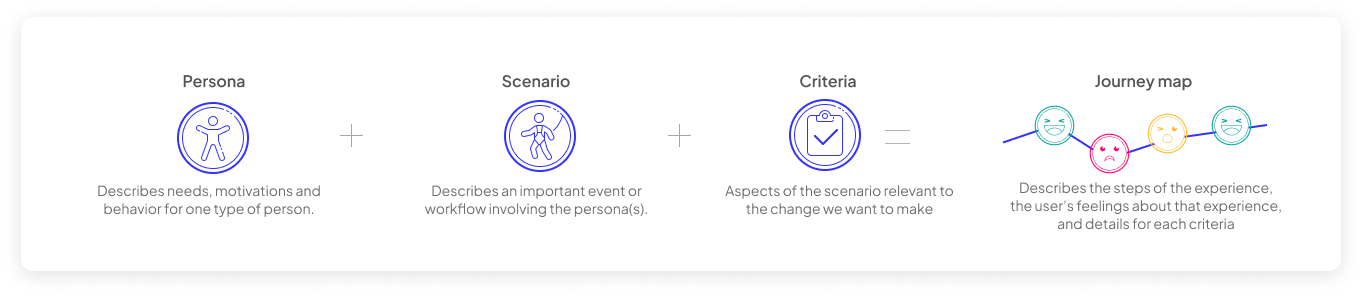
A journey map is a powerful tool that captures insights into the customer's journey in the form of a story. It's a model that represents the underlying complexity of the real journey, simplified into a linear format. A journey map typically captures: a timeline with indications for loops and iterations; stages, tasks, or a hierarchy of activities; primary and secondary personas; actions taken by the user; the user's emotional state; pain points, user goals, and underserved needs; and product development initiatives aligned to each stage.

Journey mapping is invaluable because it creates a common understanding across teams, allows decisions to be traced back to user context and needs, identifies gaps and opportunities, and helps envision a better journey.

Why journey mapping is invaluable

Rapid Journey Mapping Steps

  1. List Assumed Personas (10 minutes) — Start by identifying who you think are the key players in the journey.
Step 1: List assumed personas
  1. List Hypothetical Goals and Tasks (20 minutes) — For each persona, list what you believe to be their main goals and tasks.
Step 2: List hypothetical goals and tasks
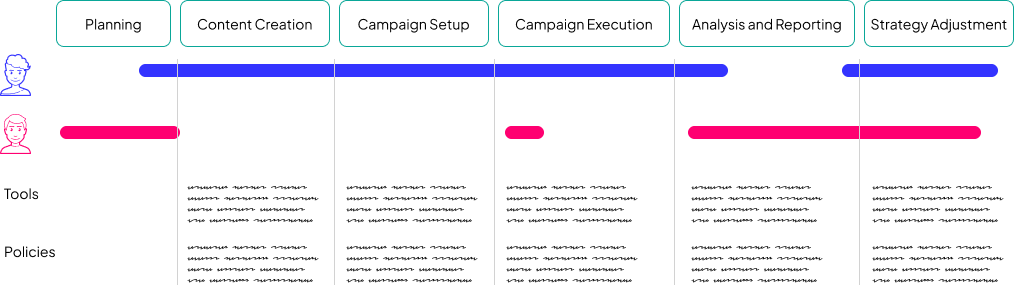
  1. Build a Hypothetical Timeline (30 minutes) — Lay out the tasks based on how you think they occur in sequence.
Step 3: Build a hypothetical timeline
  1. Document Key Criteria for Each Stage (20 minutes) — For each stage, document key criteria like tools used, policies in place, etc.
Step 4: Document key criteria
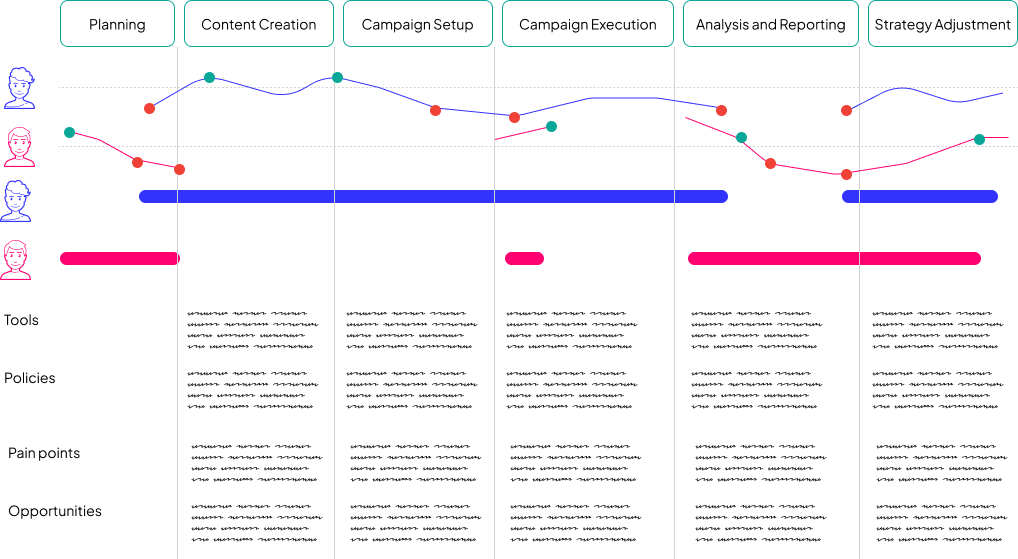
  1. Identify Potential Pain Points and Ideas (20 minutes) — List what you believe to be pain points and gaps at each stage.
  2. Map the Hypothetical Emotional Journey (15 minutes) — Map out how you think the user might feel at each stage.
Steps 5-6: Pain points and emotional journey

Ready to map your customer journey?

Let's work together to understand and improve your service delivery.

Debunking the myth: Innovation isn't just about building new products and technology

When most people think of innovation, they picture a team of engineers or designers huddled around a workbench, tinkering with a new gadget or software application. While this image isn't entirely inaccurate, it only captures a small part of what innovation truly entails.

The common perception of innovation is that it's all about building new products and technology. We often associate innovation with groundbreaking inventions like the iPhone, self-driving cars, or artificial intelligence. While these are certainly examples of innovation, they represent only the tip of the iceberg.

At its core, innovation is about creating value for customers and the business. It's about identifying unmet needs, solving problems, and delivering solutions that make people's lives better or easier. Innovation can take many forms, from improving existing products and services to creating entirely new business models. It can involve changes to processes, pricing, distribution channels, or customer experience.

One of the most critical aspects of innovation is understanding customers' needs, preferences, and behaviours. Innovative companies invest heavily in customer research. By gaining a deep understanding of customers, companies can identify opportunities for innovation that might not be immediately obvious.

Another key aspect is experimentation and testing. Rather than assuming that an idea will work, innovative companies seek to validate their hypotheses through rigorous testing. Experimentation allows companies to fail quickly and cheaply, rather than investing significant resources into an idea that may not pan out.

One of the most counterintuitive aspects of innovation is the importance of killing ideas. Innovative companies are ruthless about killing ideas that don't show promise or align with their strategic goals. By killing ideas early in the process, companies can focus their efforts on the most promising opportunities.

Ultimately, innovation is about creating a culture that values curiosity, experimentation, and continuous improvement.

Ready to innovate?

Let's explore how to build a culture of innovation that drives real business value.

Embracing AI and emerging tech in design: shaping a new era of innovation

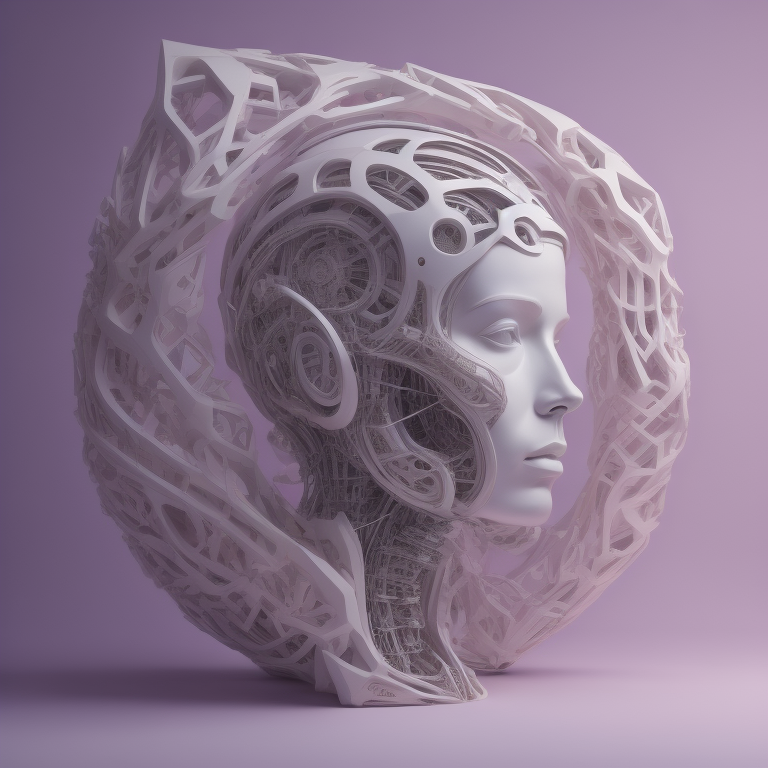
AI-generated cyborg artwork

AI-generated art via Imagine Art.

From artificial intelligence to augmented reality and blockchains, the rapid evolution of technology has left designers racing to keep up. Those at the forefront are leveraging AI and emerging tech to creatively reimagine their design approaches.

Human-centred design prioritises the needs, experiences and preferences of end users. We see five key areas in which AI supports the human-centred design process: data-driven insights that analyse user data to uncover insights that inform smarter design decisions; personalisation that adapts products and services based on user preferences; task automation that frees designers to focus on critical thinking and problem-solving; natural language processing through AI-powered chatbots that guide users through design processes; and predictive modelling that simulates and tests design alternatives.

Empowering creativity with AI and emerging technologies

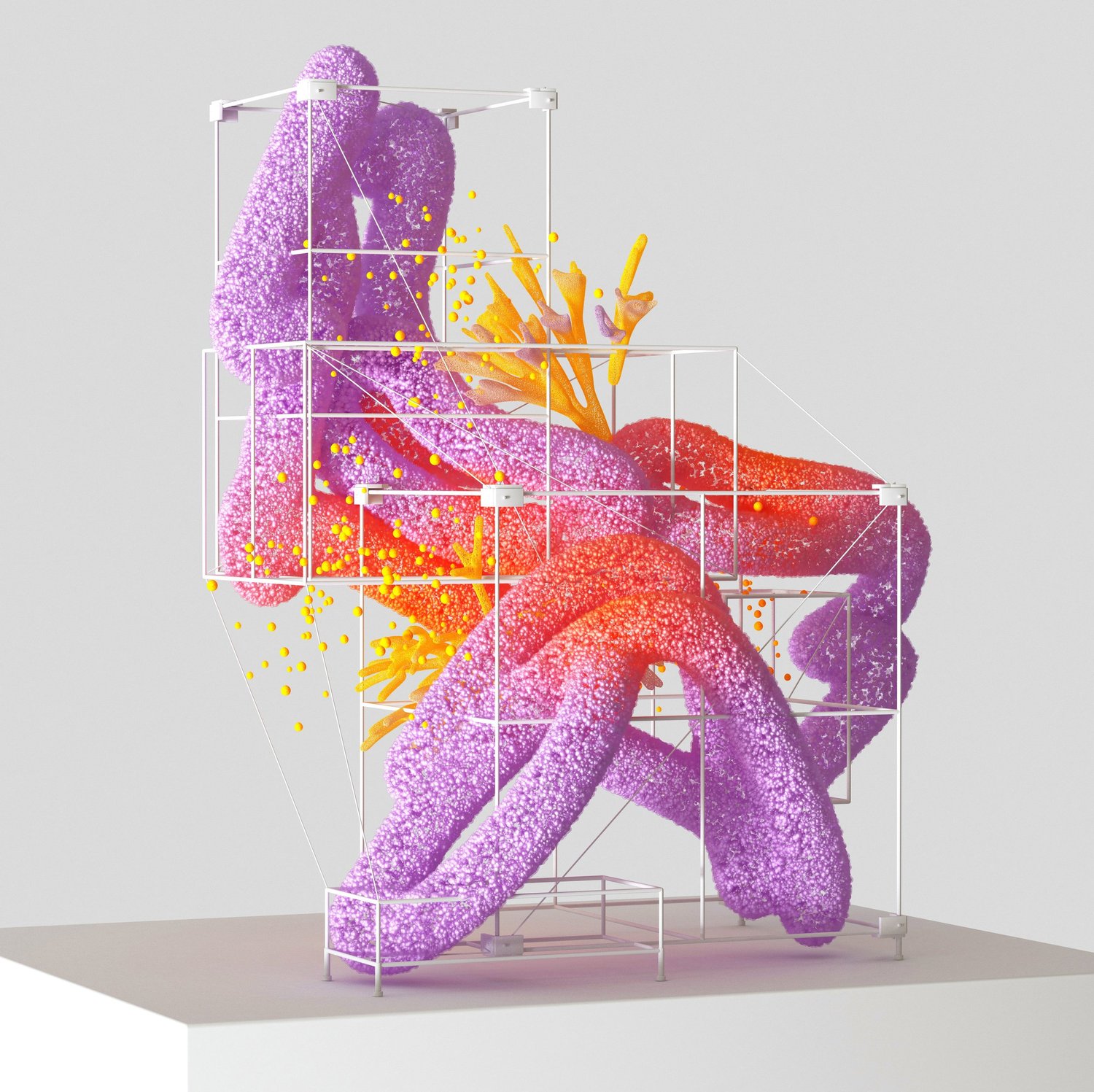
Google DeepMind digital biology illustration

Digital Biology: The illustration uses scaffolding as a metaphor for AI building biological structures.

On empowering creativity: AI leverages machine learning algorithms to analyse vast repositories of existing designs, art and cultural references. It can generate diverse design options and help designers think beyond usual creative boundaries. Through interactive interfaces, designers can engage in a dynamic exchange of ideas with AI-powered tools. AI also accelerates prototyping and iteration by allowing designers to explore a broader range of design possibilities.

Ethical considerations are essential: bias and fairness in AI systems; privacy and data protection; maintaining human oversight and control; transparent communication about AI use; and ongoing accountability for ethical impacts.

By combining AI, emerging technologies, and human-centric design, organisations can unlock untapped potential, enabling transformative experiences and solutions.

Ready to design with emerging tech?

Let's collaborate on how to responsibly integrate AI and emerging technologies into your design practice.

Announcing the launch of Arteri Academy

Arteri Academy logo

Arteri Academy is here! Over the last year, our training team has been dedicated to researching, developing and testing concepts for delivering workforce training that equips organisations with the tools and techniques needed to drive more impact.

Today, we're thrilled to announce the launch of Arteri Academy, our comprehensive online training program dedicated to improving business outcomes with better business design. This launch marks a significant milestone in our mission to equip professionals with the skills needed to bridge the gap between strategy and execution, align user needs with business requirements, and transform creative ideas into practical implementations.

Ready to elevate your team's skills?

Explore Arteri Academy and discover how we can help your team drive better business outcomes.